The Claude Code Phenomenon: Tempering Optimism with Historical Perspective
Developers and senior executives alike are captivated by Claude Code—a powerful validation of its promise. Busy professionals are building weekend projects outside their regular schedules and sharing impressive accomplishments on LinkedIn and X.
This phenomenon extends beyond any single industry, with notable figures like Garry Tan (CEO of Y Combinator) creating entire GitHub repositories of Claude skills for public use.
That busy executives can build functional software over a weekend demonstrates the potential of this technology. Claude Code has captured the imagination of both developers and non-developers—a remarkable achievement by Anthropic.
Now that nearly anyone with a computer and an Anthropic API key can produce software, what does this mean for professional software developers, particularly in specialized fields like chip design?
The optimism and energy around building is palpable. Humans have always felt compelled to create, and Claude Code has lowered the barrier to achievement. This represents a unique moment in computing history—not because of generative models themselves, but because it inspires engineers and non-engineers to build things they couldn't have imagined creating a year ago.
However, this optimism must be tempered with reality: What should we build, and why? Is there still a need for domain experts?
The 3D Printer Parallel
This moment feels similar to the 3D printing revolution, when our imagination seemed limitless—we envisioned printing chips, machine parts, even shoes. The 3D printing ecosystem hasn't materialized as imagined, though it may still evolve to where people can print clothes, furniture, homes, and computers on demand.
Historical Precedents: When "Democratization" Fell Short
The promise that anyone can build complex software without being a "coder" is compelling, but computing history is filled with similar movements that promised to make professional programmers obsolete, only to hit walls. Here are three major precedents:
1. HyperCard (1987): "Programming for the Rest of Us"
The Promise: Creator Bill Atkinson envisioned "erasing the line between users and creators." Many believed that within five years, everyone would write custom software instead of buying it.
Why it fell short: It hit the Complexity Wall. Building a simple recipe book or quiz was easy, but complex tasks—managing multi-user databases or optimizing memory—left non-coders lost. Citizen developers created thousands of buggy, unoptimized, unmaintainable apps. The world moved to the Web, and creators realized that building robust systems required the same logical rigor as traditional programming.
2. Fourth-Generation Languages (1980s)
The Promise: The "End of Programming." 4GLs (like SQL, Focus, or Nomad) would allow business managers to describe needs in plain English-like syntax, and computers would generate COBOL or C code.
Why it fell short: This revealed the Specification Paradox. The hardest part of programming isn't syntax—it's the absolute precision of thought required. "Process the payroll" was too vague; describing every edge case (taxes, overtime, leave, currency conversion) essentially was programming, just in a wordy, inefficient language. Most 4GLs became shelfware.
3. No-Code/Low-Code Platforms (2010s)
The Promise: Tools like Bubble, Adalo, and Webflow would make coding a legacy skill through visual drag-and-drop interfaces.
Why it fell short: These created The Maintenance Trap. Building version one was fast and exciting, but software is living, not static. When apps broke, faced security vulnerabilities, or needed to scale to 100,000 users, non-coder creators were stranded. Without understanding underlying architecture (databases, APIs, state management), they had to hire professional developers to fix or rewrite their no-code creations.
Why Claude Code May or May not Face Similar Hurdles
Despite Claude's superior reasoning capabilities, it faces three historical "Killers of Hype":
The 80/20 Trap: Claude gets you 80% of the way to a functioning app in minutes, but the last 20%—edge cases, security hardening, deep debugging—is where 80% of actual work lives. Non-coders may not know what questions to ask for that final 20%.
Bit Rot and Maintenance: Software requires constant updates. Building an app with Claude without understanding how it works is like being a pilot who doesn't understand engines. When the API version changes or something breaks, you're helpless.
"Garbage In, Garbage Out": Without systems thinking, users will instruct Claude to build inefficient, insecure, or logically flawed structures. Claude will follow those instructions perfectly, creating a "perfectly functioning" disaster.
Is This Time Different?
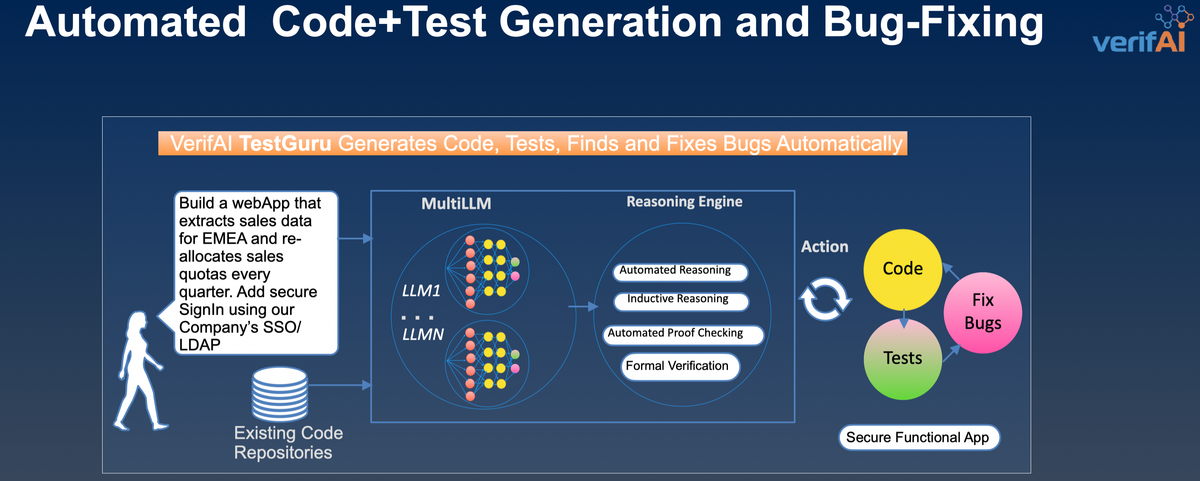
One crucial difference: Claude Code, Github Copilot, Codex, Gemini CLI and other Coding agents, can read and respond to its own errors. Unlike HyperCard or 4GLs that displayed "Syntax Error" and abandoned you, Claude can see errors, hypothesize fixes, and apply them.
However, history suggests that tools like Claude Code won't eliminate the need for software skills. Instead, they'll raise the ceiling of what skilled developers can accomplish while leaving non-coders frustrated once they move past simple applications.
The Future: Model-Agnostic Development
More interesting is the prospect of using multiple models and CLI tools. Imagine end-users who are model-agnostic and tool-agnostic, harnessing the power of Claude Code, Codex, Gemini CLI, and multiple models without vendor lock-in.
When intelligence becomes commoditized through LLMs, innovation elevates to harnessing collective intelligence across models to approach ground truth and build products that improve enterprise efficiency. For instance, can we reduce chip design cycles from 12-24 months to 3 months?
The answer likely lies not in replacing domain expertise, but in amplifying it.